




FAQ
Trouvez des réponses rapides aux questions fréquentes sur les lecteurs d'acide urique Sinocare — de l'utilisation et l'entretien de votre appareil à la compréhension des résultats des tests. Obtenez les informations dont vous avez besoin pour surveiller votre santé en toute confiance.
Peut-on tester l'acide urique à domicile ?
Oui, vous pouvez tester l'acide urique à domicile en utilisant un kit de test sanguin par piqûre au doigt.
Ces tests à domicile vous permettent de vérifier rapidement vos niveaux d'acide urique et de suivre les variations au fil du temps.
Ils sont pratiques pour un suivi régulier, mais ne doivent pas remplacer les tests médicaux professionnels lorsque un diagnostic précis est nécessaire.
Les tests d'acide urique à domicile sont-ils précis ?
Les tests d'acide urique à domicile peuvent être assez précis pour un suivi quotidien lorsqu'ils sont utilisés correctement.
La plupart des kits de test à domicile fournissent des résultats proches de ceux des analyses sanguines en laboratoire, mais de petites variations peuvent survenir en raison de facteurs tels que la qualité de l'appareil, la méthode de test et la manipulation par l'utilisateur.
Pour un diagnostic médical ou des décisions de traitement, les analyses en laboratoire restent recommandées.
Qu'est-ce que le kit de test d'acide urique Sinocare ?
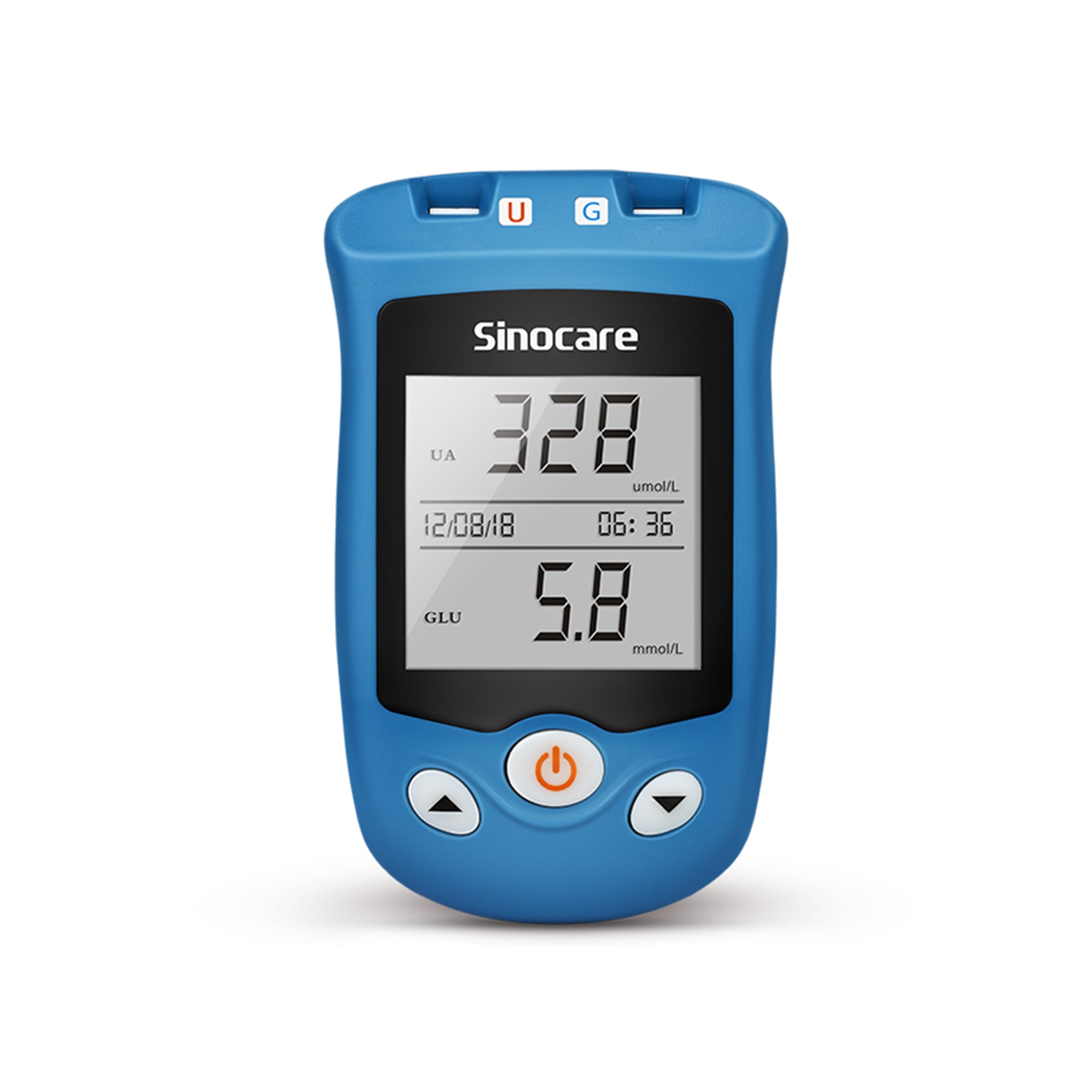
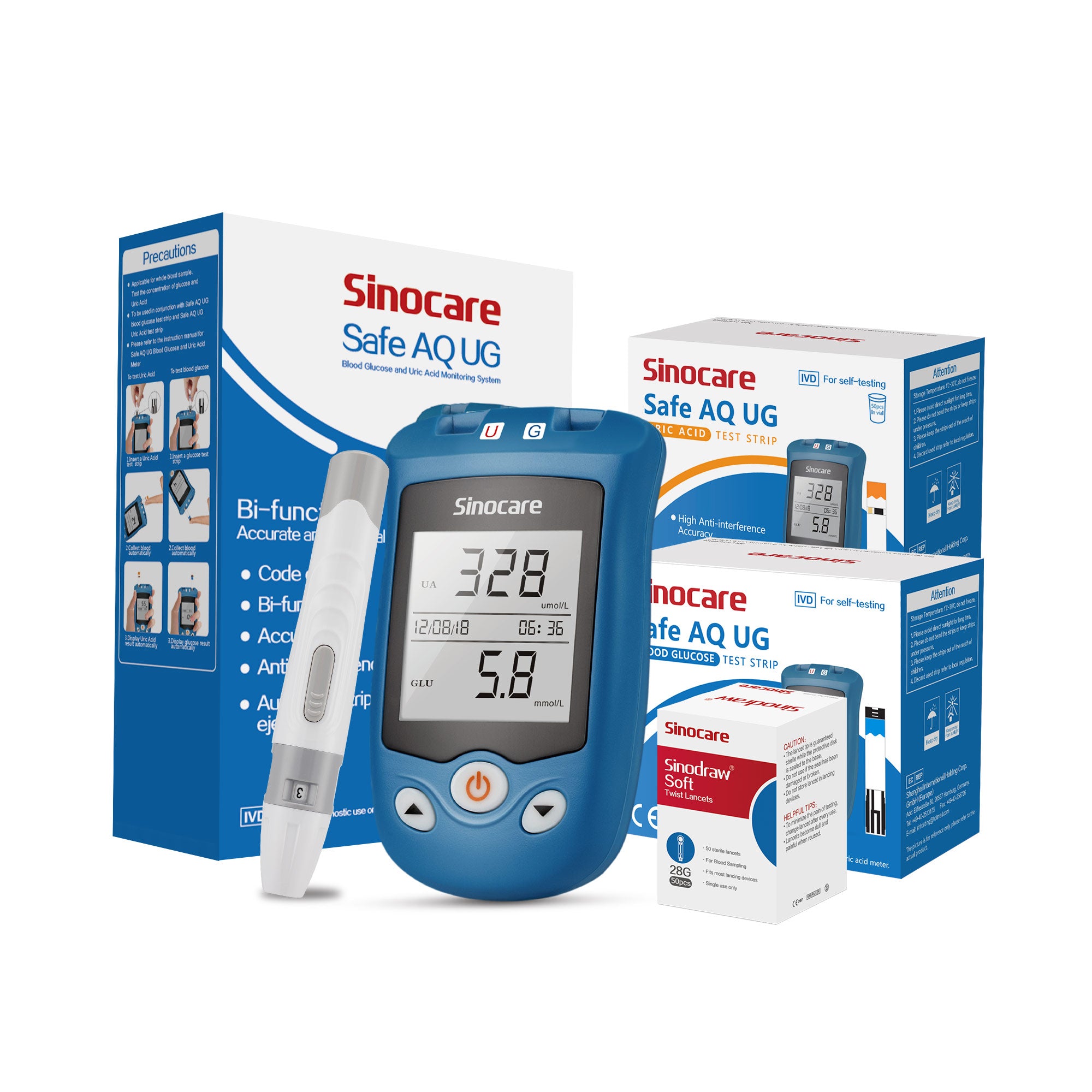
C’est un moniteur d’acide urique à domicile qui fonctionne également comme un moniteur de glucose sanguin et d’acide urique pour des tests quotidiens faciles.
Comment utiliser le lecteur Sinocare ?
Insérez une bandelette de test, ajoutez une goutte de sang, et lisez votre test d'acide urique ou le résultat de votre glycémie en quelques secondes.
Qui a besoin de ce moniteur ?
Personnes atteintes de goutte, d'acide urique élevé, de diabète, ou toute personne surveillant à la fois les niveaux d'acide urique et de sucre dans le sang.
Le kit de test d'acide urique Sinocare est-il précis ?
Oui. Le moniteur d'acide urique utilise une technologie avancée de biocapteurs pour des résultats rapides et fiables.
À quelle fréquence devrais-je tester ?
Testez une à deux fois par semaine — ou selon les recommandations de votre professionnel de santé — pour gérer à la fois l'acide urique et le glucose.
Quel est un taux normal d'acide urique ?
Généralement entre 3,5 et 7,2 mg/dL. Le kit de test d'acide urique Sinocare vous aide à rester dans une plage saine.
Où puis-je acheter le moniteur Sinocare ?
Vous pouvez commander le moniteur de glycémie et d'acide urique directement sur le site officiel de Sinocare.
Articles de blog

mg/dL contre mmol/L : ce que signifie réellement votre unité de glycémie
Vous voyez 5,9 au lieu de 100 sur votre nouveau glucomètre ? Pas de panique : il utilise peut-être simplement les mmol/L au lieu des mg/dL. Découvrez comment fonctionnent les unités de glycémie, co...

Comment soulager la douleur de la goutte la nuit : 6 façons de trouver un soulagement
Découvrez comment soulager les douleurs de la goutte la nuit grâce à six conseils pratiques, notamment pour atténuer la douleur, surélever la jambe, appliquer des compresses froides, bien vous hydr...
Les bandelettes de test de glucose sont-elles universelles ?
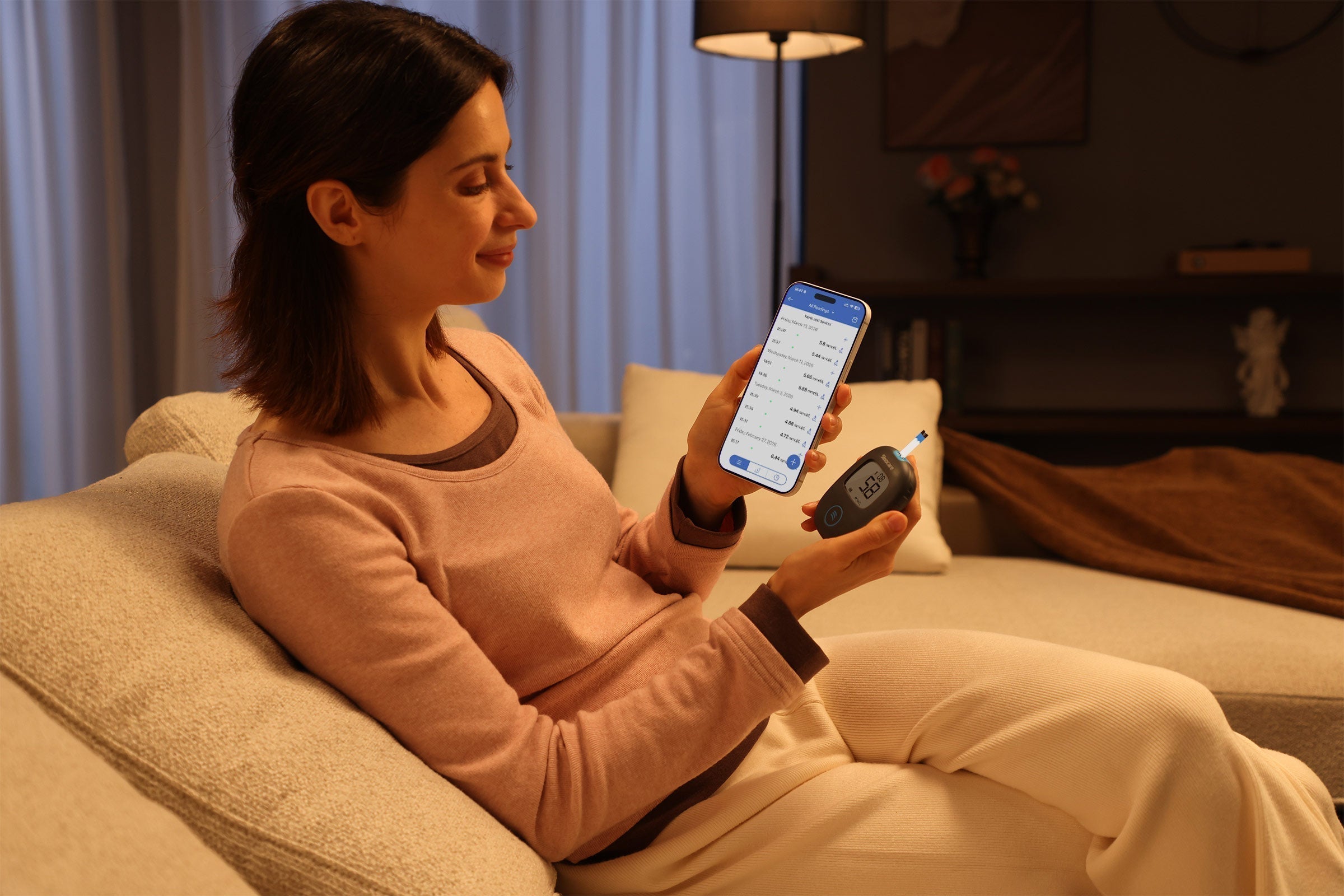
Les bandelettes de test de glycémie ne sont pas universelles et ne peuvent pas être utilisées de manière interchangeable sur différents appareils. Chaque glucomètre nécessite ses propres bandelette...