


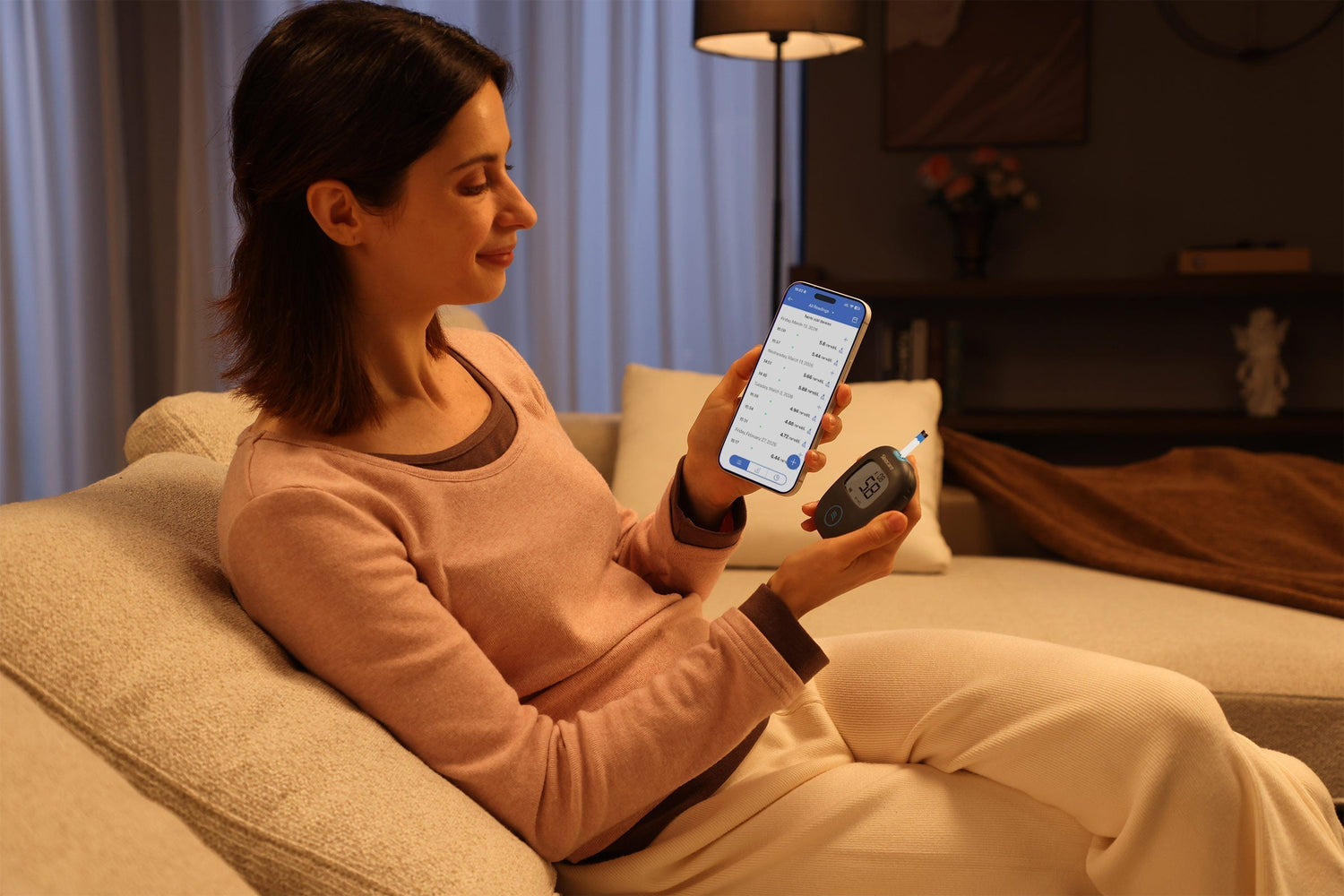
If you have diabetes or often experience unstable blood sugar levels, your doctor may recommend purchasing a blood glucose meter for home testing. It helps you understand how exercise, food, and medication affect your blood sugar levels. Without accurate blood glucose readings, it is difficult to adjust your daily habits or treatment plan.
A common question many users ask is: Are glucose test strips universal?
No. Glucose test strips are not interchangeable across different devices. Each glucose meter requires its own compatible strips to ensure accurate results.
How Blood Glucose Test Strips Work?
Test strips for blood glucose monitors are disposable biosensors designed to facilitate a precise chemical reaction.
When you apply a drop of blood to the testing strip, the glucose in your blood reacts with a specific enzyme, usually glucose oxidase or glucose dehydrogenase. This reaction generates an electrical current, and the strength of this current is directly proportional to the amount of glucose in your blood.
The blood glucose meter then reads this signal and converts it into a blood sugar value displayed on the screen. This process is fast and usually takes only a few seconds.
Why are Test Strips Not Universal?
Each meter has its specific test strip technology and calibration method. For example:
- Some test strips use glucose oxidase, while others use glucose dehydrogenase, and the glucose meter is designed for a specific chemical component.
- Some glucose meters require test strip codes, while other systems are pre-calibrated. This can cause mismatches.
- The electrical contacts on test strips vary by brand. These contacts connect the strip to the glucose meter. If the contacts are not properly aligned, the meter cannot read the test strip data.
How to Identify Compatible Test Strips?
To ensure you purchase diabetic test strips that will actually work and are compatible with your glucose meter, you can:
- Check the user manual. Check the name of the compatible test strips. Keep a photo of this page on your phone for quick reference when you are shopping online.
- Look for labels and packaging corresponding to the meter model.
- Avoid using test strips from other brands. In general, test strips from different brands are not compatible.
For example, if you are using the Sinocare Safe AQ Pro Ⅰ glucose meter, you must use the Safe AQ Pro Ⅰ blood glucose test strips. Even within the same brand, different test strips are not always interchangeable. For instance, Sinocare Safe Accu test strips are not compatible with Safe AQ Pro Ⅰ test strips. Always verify that the model name on your meter matches the model name on the strip vial exactly.

Potential Risks of Using Incorrect Test Strips
The danger goes beyond a simple error message on your screen.
1. Improper Insulin or Medication Use
If a mismatched strip gives a falsely high reading, you might administer too much insulin, leading to dangerous hypoglycemia (low blood sugar). Conversely, a falsely low reading might lead you to skip a necessary dose.
2. Anxiety and Panic
Fluctuating, inaccurate readings can cause unnecessary stress. Seeing a "180 mg/dL" when you are actually at "110 mg/dL" can lead to anxiety and panic.
3. Interfered Medical Judgment
Your healthcare provider relies on your data to adjust your long-term treatment plan. Inaccurate data from wrong strips can lead to changes to your plans that you don't actually need.
4. Wasted Money
High-quality blood sugar monitor test strips are an investment. Buying a large pack of strips only to realize they aren't compatible with your device is a common and avoidable financial drain.
Tips for Home Blood Glucose Monitoring
Besides understanding that diabetes testing strips are not interchangeable, what other precautions should be taken when using a glucose meter at home?
1. Store Test Strips Properly
Test strips are sensitive to the environment. The enzymes on the strip can degrade if exposed to:
- Moisture: Try to store the diabetes testing strips in an environment with moisture lower than 80% to improve accuracy.
- Heat: Store your strips in a cool, dry place. Never leave them in a hot car or near a window.
- Refrigeration: Do not refrigerate or freeze them, as condensation can damage the chemicals.
2. Follow Instructions Diligently
Always refer to the device guide when learning how to use the glucose meter and test strips. Each model may have slightly different steps.
- The test strip is suggested to be used in 3 minutes
- Never reuse a test strip that has been applied to blood
3. Pay Attention to Expiration Dates
Chemicals lose their potency over time. Using an expired test strip is just as risky as using the wrong brand. Most strips expire 90 to 180 days after the vial is first opened. For example, the valid expiration for Sinocare test strips is 6 months after opening. Mark the date you opened the vial on the label with a permanent marker.
Moreover, after taking the test strip, immediately cover the vial.
FAQs
1. Are glucose test strips universal between different models of the same brand?
Not always. In most cases, even within the same brand, different meter models require different strips. However, if you purchase the Sinocare Safe AQ Smart and Safe AQ Voice glucose meter, they both use the Safe AQ Test Strips. Other than that, other models are not compatible with each other.
2. Can expired test strips still be used if the package has not been opened?
No. Even in a sealed vial, the enzymes slowly break down. Using expired test strips can lead to inaccurate readings.


Leave a comment
All comments are moderated before being published.
This site is protected by hCaptcha and the hCaptcha Privacy Policy and Terms of Service apply.