


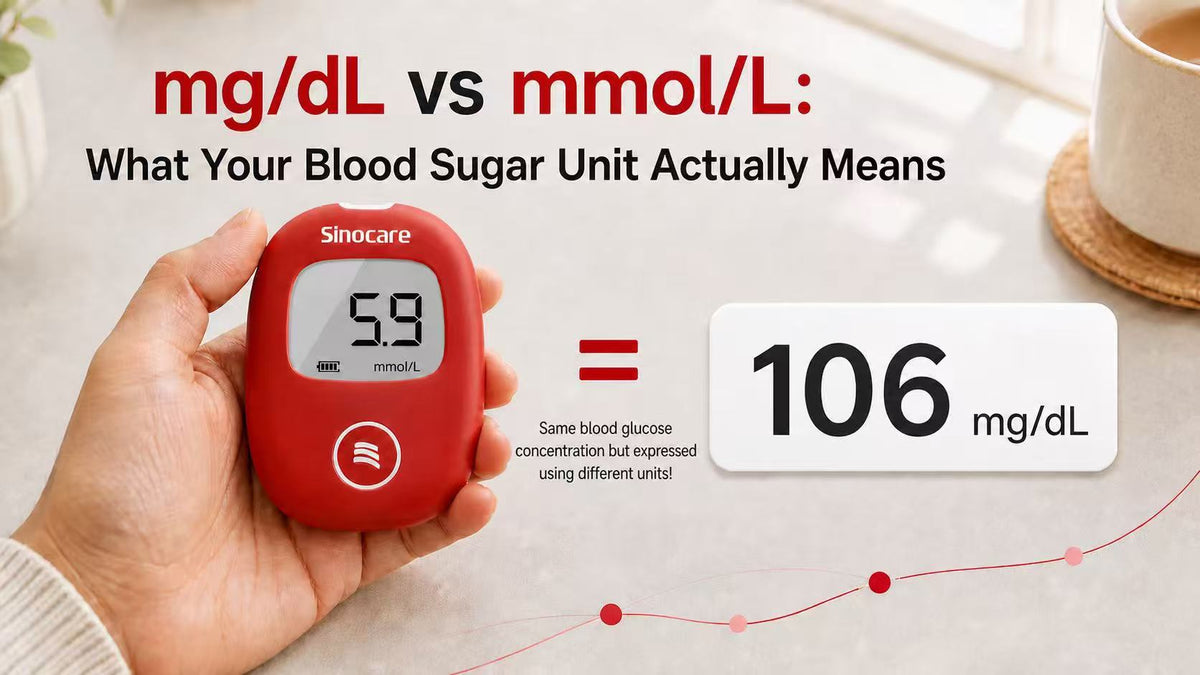
Twój stary glukometr działał bez zarzutu przez ostatnich kilka lat. Jednak gdy sprawdziłeś ostatnie wyniki badań laboratoryjnych, odczyty z tego glukometru wydały Ci się nieco niespójne, więc zamówiłeś nowy glukometr. Nowe urządzenie dociera do Ciebie, a Ty mierzysz poziom cukru we krwi za pomocą nowego paska testowego. Czekasz na zakończenie odliczania, a na wyświetlaczu pojawia się 5.9!
Zamierasz na chwilę. Spodziewałeś się wyniku nieco poniżej lub powyżej 100. Nagle pojawia się mnóstwo myśli! Czy jestem zbyt chory? Czy glukometr działa prawidłowo? Czy trafił mi się wadliwy egzemplarz? Czy powinienem wykonać badanie ponownie? Coś zjeść? Przyjąć lek?
Masz pełne prawo czuć dezorientację i niepokój, ponieważ używany przez Ciebie glukometr pokazuje poziom cukru we krwi w innej jednostce niż Twój stary glukometr. Wynik 5.9, który zobaczyłeś, po przeliczeniu na jednostkę używaną przez stare urządzenie wynosiłby 106. Te dwie różne jednostki to odpowiednio mmol/L i mg/dL. Możesz traktować je jak dwie różne skale temperatury, podobnie jak Celsjusza i Fahrenheita.
mg/dL a mmol/L: Co oznaczają jednostki poziomu cukru we krwi?
Jednostki poziomu glukozy we krwi informują przede wszystkim o ilości cukru obecnego w pobranej próbce krwi. Dwie najczęściej stosowane jednostki w glukometrach to miligramy na decylitr (mg/dL) i milimole na litr (mmol/L).
Jednostka mg/dL informuje, ile glukozy znajduje się w jednym decylitrze (jednej dziesiątej litra) krwi, natomiast mmol/L mierzy ilość glukozy w jednym litrze krwi. Obie jednostki różnią się sposobem przedstawiania wyników, ale opisują ten sam poziom glukozy we krwi. Mówiąc prościej, opisują to samo, tylko w różnych skalach [1].
Wyjaśnijmy, jak to działa.
Krótka odpowiedź: jedna liczba, 18
Aby przeliczyć jedną jednostkę na drugą, wystarczy użyć wartości 18. Dokładny współczynnik przeliczeniowy wynosi około 18.01559 i opiera się na masie molowej glukozy (180.156 gramów na mol) [2]. W codziennym użyciu zaokrąglamy współczynnik do 18, aby ułatwić obliczenia poziomu cukru we krwi.
Wzór przeliczania mg/dL na mmol/L: mg/dL ÷ 18 = mmol/L (Przykład: 126 mg/dL ÷ 18 = 7.0 mmol/L)
Wzór przeliczania mmol/L na mg/dL: mmol/L × 18 = mg/dL (Przykład: 6.5 mmol/L × 18 = 117 mg/dL)
Ostrzeżenie: Współczynnik 18 działa wyłącznie dla glukozy. Nie używaj ×18 ani ÷18 w przypadku hemoglobiny A1c (HbA1c), ciał ketonowych we krwi ani kwasu moczowego. Dzieje się tak dlatego, że badania te mierzą inne substancje i mają własne jednostki.

Dlaczego w różnych krajach nadal stosuje się różne jednostki poziomu cukru we krwi?
Powód jest mniej związany z medycyną, a bardziej z historią.
Międzynarodowa Federacja Chemii Klinicznej i Medycyny Laboratoryjnej (IFCC) od dawna zaleca podawanie stężenia glukozy w osoczu w jednostce mmol/L, niezależnie od rodzaju próbki i zastosowanej technologii [3]. Podczas gdy większość krajów na świecie przyjęła zalecaną przez IFCC jednostkę już dziesięciolecia temu, niektóre państwa, takie jak Stany Zjednoczone, nigdy nie przeszły z mg/dL na mmol/L, dlatego mg/dL nadal jest tam standardową jednostką [4].
Najbezpieczniej jest więc używać jednostki stosowanej w Twoim planie leczenia oraz przez lekarza analizującego Twoje wyniki poziomu cukru we krwi. Zanim zamówisz nowy glukometr, sprawdź opcję wyboru jednostki na stronie produktu. Jeśli nadal nie masz pewności, którą jednostkę wybrać, zapytaj lekarza, farmaceutę lub personel lokalnej przychodni, jakiej jednostki używają.
Jak rozpoznać, na którą jednostkę patrzysz?
Nigdy nie zakładaj, że wysoki wynik poziomu cukru we krwi jest automatycznie podany w mg/dL, a niski w mmol/L. Twój wynik może czasami znacznie wykraczać poza typowy zakres, dlatego zawsze sprawdzaj jednostkę zapisaną obok liczby. Ten prosty krok może oszczędzić Ci wielu nieporozumień. Istnieją jednak sytuacje, w których można łatwo rozpoznać, którą jednostkę pokazuje domowy glukometr.
Każdy wynik powyżej 34 to prawdopodobnie mg/dL. Jeśli domowy glukometr używa jednostki mmol/L, maksymalny wynik liczbowy, który może wyświetlić, to 33.3 mmol/L (600 mg/dL), dlatego każda wartość powyżej tej liczby zazwyczaj powoduje wyświetlenie komunikatu „HI” lub kodu błędu. Jeśli jednak glukometr pokazuje wartość powyżej około 34, można z dużym prawdopodobieństwem założyć, że wbudowaną jednostką jest mg/dL.
Wartość poniżej około 20 to prawdopodobnie mmol/L. W większości glukometrów z jednostką mg/dL najniższy wynik liczbowy, który mogą wyświetlić, to 20 mg/dL (1.1 mmol/L). Każda wartość poniżej tego progu często powoduje wyświetlenie komunikatu „LO” lub kodu błędu.
Wynik staje się niejednoznaczny, gdy mieści się między 20 a 34. Wartość 22 może oznaczać 22 mg/dL (1.1 mmol/L), czyli hipoglikemię stopnia 2 (niski poziom cukru we krwi). Z kolei wynik 22 mmol/L (396 mg/dL) wskazuje na znaczną hiperglikemię (wysoki poziom cukru we krwi). Oba wyniki wymagają natychmiastowej pomocy medycznej, ale wiążą się z przeciwnymi sposobami postępowania.
Dlatego najlepszym rozwiązaniem nie jest zgadywanie, lecz potwierdzenie, na jaką jednostkę ustawiony jest glukometr. Jeśli glukometr pokazuje słowo zamiast wyniku, nasz przewodnik po wynikach HI i LO wyjaśnia, co ono oznacza i co należy zrobić dalej. Jeśli wyświetla kod, sprawdź nasz przewodnik po kodach błędów, aby zrozumieć problem.
Nie myl jednostki glukometru z jednostkami HbA1c
HbA1c to miara średniej ekspozycji na glukozę we krwi w ciągu poprzednich 2–3 miesięcy. Nie używa jednak tych samych jednostek glukozy co glukometry. Jest wyrażana jako wartość procentowa (%), co stanowi standard w Stanach Zjednoczonych, albo w milimolach na mol (mmol/mol), stosowanych w Wielkiej Brytanii i innych krajach [5].
Wiele osób myli jednostkę mmol/mol z jednostką mmol/L stosowaną przez glukometry. Wynik HbA1c wynoszący 30 mmol/mol (4.9%) i wynik glukozy wynoszący 30 mmol/L to niezwiązane ze sobą wartości. Wynik 30 mmol/mol jest niższy od typowego progu stanu przedcukrzycowego, natomiast wynik 30 mmol/L oznacza ciężką hiperglikemię i stan nagły wymagający pomocy medycznej [6]. Dlatego zawsze sprawdzaj pełną jednostkę, a nie tylko jej pierwsze dwie litery.
Często zadawane pytania (FAQ)
Czy 5.6 to to samo co 101?
Tak. Jeśli jednostką jest mmol/L, wtedy 5.6 × 18 = 100.8, a po zaokrągleniu wynik wynosi 101 w jednostce mg/dL. To ten sam wynik wyrażony w dwóch różnych jednostkach.
Czy mg/dL jest dokładniejszą jednostką niż mmol/L?
Nie. Obie jednostki pokazują ten sam poziom glukozy we krwi, dlatego żadna z nich nie jest dokładniejsza od drugiej. Różnica między tymi jednostkami przypomina różnicę między skalą Celsjusza a skalą Fahrenheita. Obie służą do pomiaru temperatury i można łatwo przeliczać jedną na drugą.
Czy mogę rozpoznać jednostkę wyłącznie na podstawie liczby?
Nie! To bardzo ryzykowna praktyka, ponieważ jeśli wynik mieści się między 20 a 34, może być wyrażony zarówno w mmol/L, jak i w mg/dL. Dlatego sprawdź jednostkę na ekranie glukometru.
Jaką jednostkę pokaże mój glukometr, jeśli kupię go za granicą?
Zależy to w dużej mierze od kraju, w którym go kupujesz. mg/dL jest powszechnie stosowane w Stanach Zjednoczonych i kilku innych krajach, natomiast mmol/L jest często stosowane w wielu innych systemach. Niektóre urządzenia używają obu jednostek. Przed zamówieniem sprawdź specyfikację glukometru.
Moja przychodnia podała mi wynik w innej jednostce. Co mam zrobić?
Prosta odpowiedź to przeliczyć wartość na preferowaną jednostkę. Podziel przez 18, aby przeliczyć mg/dL na mmol/L, i pomnóż przez 18, aby przeliczyć mmol/L na mg/dL.
Jakiej jednostki używają glukometry Sinocare do pomiaru poziomu cukru we krwi?
Wszystkie glukometry Sinocare do pomiaru poziomu glukozy we krwi są dostępne w dwóch wersjach: jedna pokazuje wyniki w mg/dL, a druga w mmol/L. Jednostka jest ustawiana przed opuszczeniem fabryki przez glukometr, a każde urządzenie wyświetla tylko jedną jednostkę. Ustawienie jest zaprogramowane podczas produkcji i nie może zostać zmienione przez użytkownika, dlatego przed pomiarem potwierdź, jaka jednostka jest stosowana.
Każdy glukometr z oferty glukometrów Sinocare do pomiaru poziomu glukozy we krwi pozwala wybrać jednostkę wraz z rozmiarem zestawu. Po zakupie nie można przełączać się między jednostkami, dlatego jednostka wybrana przy finalizacji zamówienia pozostanie używana. Jeśli nie wiesz, której potrzebujesz, strona pomocy Sinocare dotycząca jednostek i ilości pomiarowych przeprowadzi Cię przez dostępne opcje. Jeśli glukometr pokazuje nieoczekiwaną jednostkę, potwierdź model i skontaktuj się z pomocą techniczną Sinocare przed zmianą leczenia na podstawie wyniku.
Piśmiennictwo
1. Mathew TK, Zubair M. Blood glucose monitoring. In: StatPearls. Updated April 12, 2026. StatPearls Publishing; 2026. Accessed August 28, 2026. https://www.ncbi.nlm.nih.gov/books/NBK555976/
2. National Institute of Standards and Technology. Certificate of analysis: Standard Reference Material 965c, glucose in frozen human serum. Issued September 18, 2025. Accessed August 21, 2026. https://tsapps.nist.gov/srmext/certificates/965c.pdf
3. D'Orazio P, Burnett RW, Fogh-Andersen N, et al. Approved IFCC recommendation on reporting results for blood glucose. Clin Chem Lab Med. 2006;44(12):1486-1490. doi:10.1515/CCLM.2006.275
4. Weinstock RS, Aleppo G, Bailey TS, et al. The Role of Blood Glucose Monitoring in Diabetes Management. American Diabetes Association; 2020. doi:10.2337/db2020-31
5. Sacks DB, Arnold M, Bakris GL, et al. Guidelines and recommendations for laboratory analysis in the diagnosis and management of diabetes mellitus. Clin Chem. 2023;69(8):808-868. https://doi.org/10.1093/clinchem/hvad080
6. Mustafa OG, Haq M, Dashora U, Castro E, Dhatariya KK; Joint British Diabetes Societies (JBDS) for Inpatient Care Group. Management of hyperosmolar hyperglycaemic state (HHS) in adults: an updated guideline from the Joint British Diabetes Societies (JBDS) for Inpatient Care Group. Diabet Med. 2023;40(3):e15005. doi:10.1111/dme.15005


Zostaw komentarz
Wszystkie komentarze są moderowane przed opublikowaniem.
Ta strona jest chroniona przez hCaptcha i obowiązują na niej Polityka prywatności i Warunki korzystania z usługi serwisu hCaptcha.