




Perguntas Frequentes
Encontre respostas rápidas para perguntas comuns sobre os Medidores de Ácido Úrico da Sinocare — desde como usar e manter seu dispositivo até entender os resultados dos testes. Obtenha as informações que você precisa para monitorar sua saúde com confiança.
É possível testar o ácido úrico em casa?
Sim, você pode testar o ácido úrico em casa usando um kit de teste de sangue por picada no dedo.
Esses testes caseiros permitem que você verifique rapidamente seus níveis de ácido úrico e acompanhe as mudanças ao longo do tempo.
Eles são convenientes para monitoramento rotineiro, mas não devem substituir os exames médicos profissionais quando um diagnóstico preciso for necessário.
Os testes caseiros de ácido úrico são precisos?
Os testes de ácido úrico caseiros podem ser razoavelmente precisos para monitoramento diário quando usados corretamente.
A maioria dos kits de teste caseiros fornece resultados próximos aos exames laboratoriais de sangue, mas pequenas variações podem ocorrer devido a fatores como qualidade do dispositivo, método de teste e operação do usuário.
Para diagnóstico médico ou decisões de tratamento, ainda é recomendada a realização de exames laboratoriais.
O que é o Kit de Teste de Ácido Úrico Sinocare?
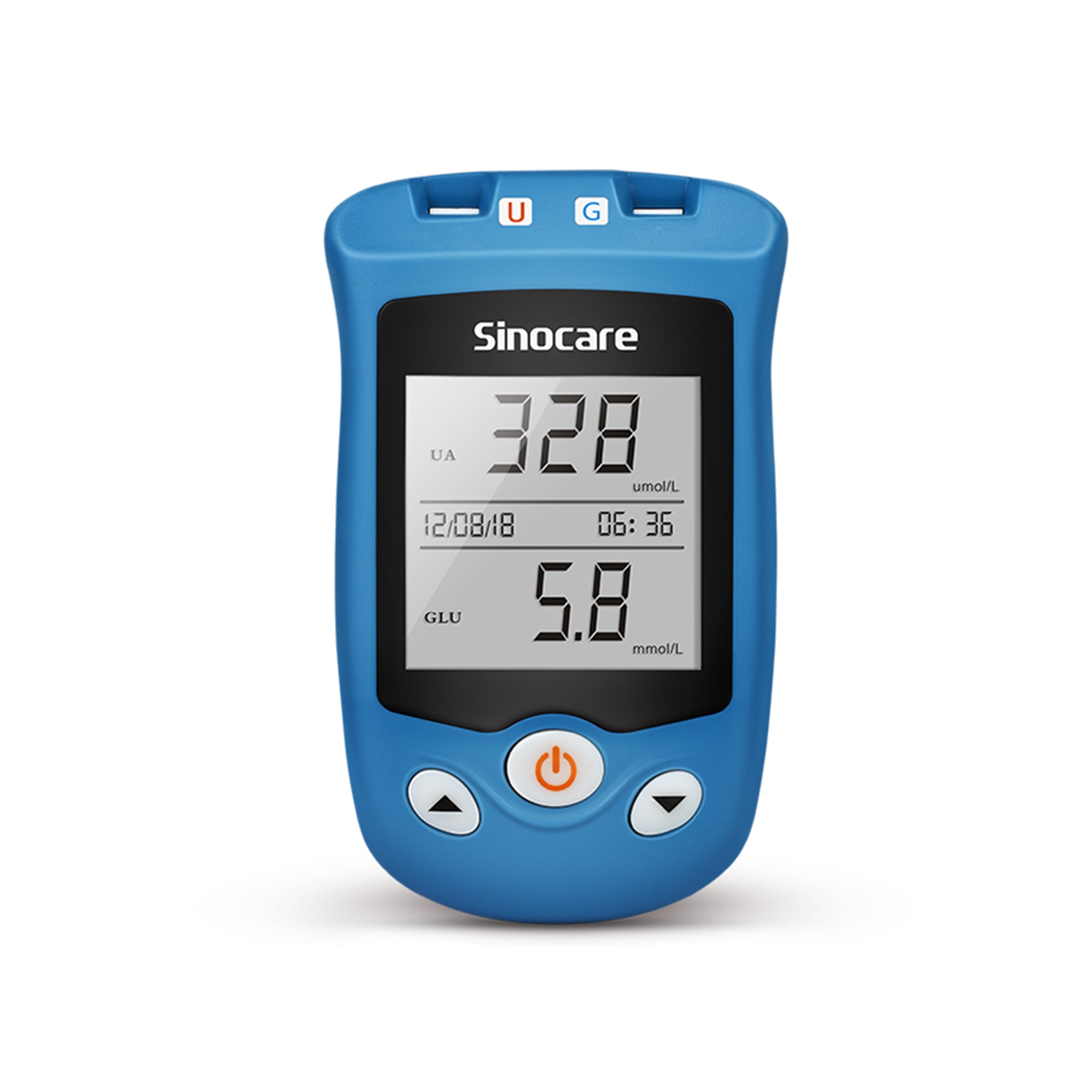
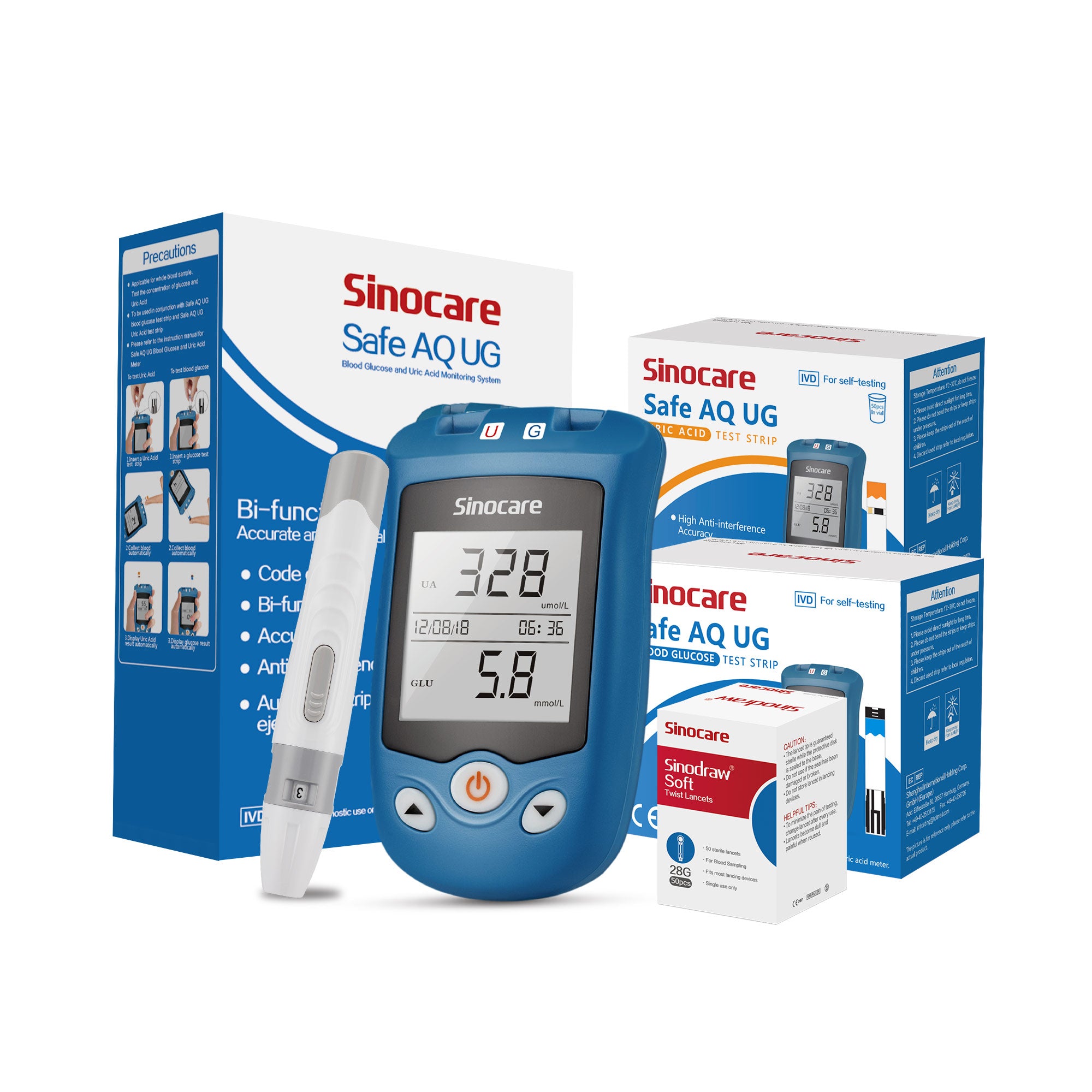
É um monitor de ácido úrico doméstico que também funciona como um monitor de glicose no sangue e ácido úrico para testes diários fáceis.
Como uso o medidor Sinocare?
Insira uma tira de teste, adicione uma gota de sangue e leia seu teste de ácido úrico ou resultado de glicose no sangue em segundos.
Quem precisa deste monitor?
Pessoas com gota, ácido úrico alto, diabetes ou qualquer pessoa que monitore tanto os níveis de ácido úrico quanto de açúcar no sangue.
O Kit de Teste de Ácido Úrico Sinocare é preciso?
Sim. O monitor de ácido úrico utiliza tecnologia avançada de biossensores para resultados rápidos e confiáveis.
Com que frequência devo testar?
Faça o teste uma ou duas vezes por semana — ou conforme recomendado pelo seu profissional de saúde — para controlar tanto o ácido úrico quanto a glicose.
Qual é o nível normal de ácido úrico?
Geralmente entre 3,5–7,2 mg/dL. O kit de teste de ácido úrico da Sinocare ajuda você a manter-se dentro de uma faixa saudável.
Onde posso comprar o monitor Sinocare?
Você pode pedir o monitor de glicose no sangue e ácido úrico diretamente no site oficial da Sinocare.
Postagens do blog

mg/dL vs mmol/L: O que sua unidade de açúcar no sangue realmente significa
Vendo 5,9 em vez de 100 no seu novo glicosímetro? Não entre em pânico - ele pode simplesmente estar usando mmol/L em vez de mg/dL. Saiba como funcionam as unidades de glicose no sangue, como conver...

Como parar a dor da gota à noite: 6 maneiras de encontrar alívio
Saiba como aliviar a dor da gota à noite com seis dicas práticas, incluindo alívio da dor, elevação da perna, compressas frias, hidratação e maneiras de prevenir futuras crises de gota.
As Tiras de Teste de Glicose São Universais?
As tiras de teste de glicose no sangue não são universais e não podem ser usadas de forma intercambiável em diferentes dispositivos. Cada medidor de glicose requer suas próprias tiras compatíveis p...