


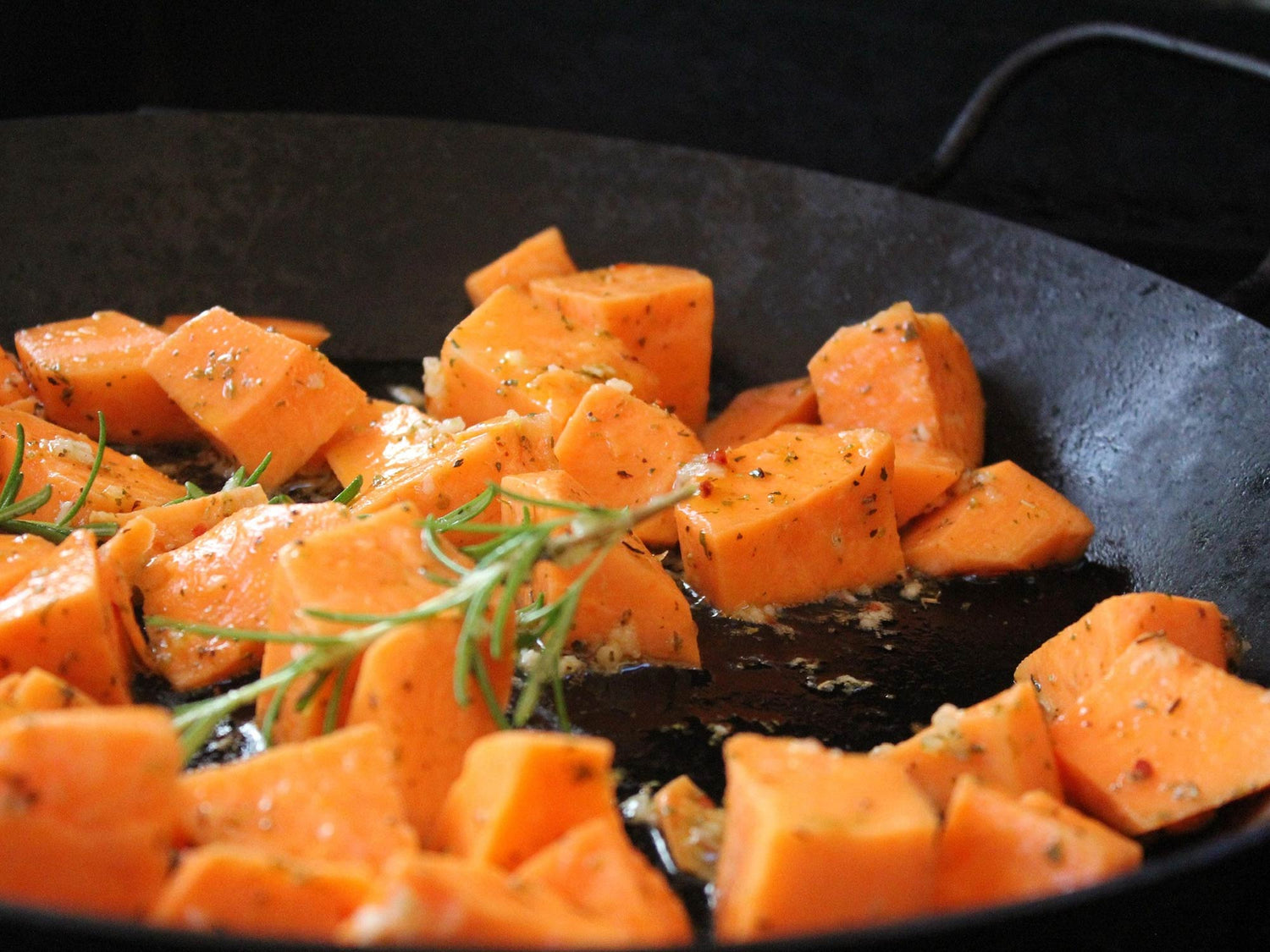
The camote is a tuber present in various parts of the world, and especially when it is of good quality, it is very sweet and mellow. The outer coloration of the skin of a fresh camote can range from red to brown, while the inner coloration of the flesh is usually orange to white, depending on the variety of camote. Usually a single medium-sized tuber of camote weighs on average about 150-200 grams but some types are larger, and camotes are harvested in autumn but can be available on the market all year round, thanks to their excellent shelf life in cool environments.
Nutrition Value of Camote
A single camote of about 200 grams is, on average, made up of about 180 calories, 4 grams of protein, 40 grams of carbohydrates, about 0.3 grams of fat, and about 7 grams of fiber. In addition, this tuber is a rich source of vitamin A, vitamin C, manganese, vitamin B6, potassium, with percentages that far exceed the recommended daily value for vitamin A.
Calories and GI in Camote
A single camote has, on average about 180 calories per serving, it is moderately caloric and should be consumed with attention to the quantities. In addition, due to its sweet taste, its glycemic index is 70, but it is considered variable: if boiled it can have a medium-low value around 50, while if baked or fried, it can exceed the value of 80, causing potentially harmful glycemic peaks if consumed by people with diabetes. For this reason, camote may not be a compatible choice for people with diabetes, as even when boiled it can still cause harmful blood sugar spikes. However, if and only if consumed in very moderate quantities and with attention to cooking, it provides excellent nutrients and beneficial substances for the body, with high quantities than common potatoes.
Benefits & Risks of Eating Camote with Diabetes
As seen above, taking camote can bring significant benefits to the body, thanks to some vitamins and minerals, and contains many antioxidant compounds, in higher quantities than other common tubers, and also has strong anti-inflammatory properties. The main components present are Beta-carotene (precursor of vitamin A which can have beneficial effects on vision and skin health) and Potassium (an essential mineral that plays a role in fluid regulation and can contribute to heart and muscle health in the body). However, due to the glycemic index considered very high, which can vary according to the cooking method, the intake of camote can cause harmful glycemic peaks if prepared in the oven or fried or if boiled but consumed in large portions; therefore it can be consumed in extreme moderation by people with diabetes, paying attention to the quantities. Therefore, for a person with diabetes, camote is not to be considered a safe tuber, despite the fact that it is properly managed in preparation.
How Much Camote Can I Eat with Diabetes?
An average portion of camote of about 200 grams can have an average of 180 calories and numerous potential benefits for the body; However, camote can cause harmful glycemic spikes due to its high glycemic index, which increases when baked or fried. Therefore, even when consumed in moderation and boiled, camote still raises blood sugar levels. Therefore, according to one's diet, the only way to consume camote, to acquire its benefits, is to consume a single small boiled portion (for example, about 50 grams) so that it can be safe for most people with diabetes. In any case, in order to always keep your blood sugar levels under control, you can count on a reliable blood glucose monitor like Sinocare comes in handy. With 20+ years in diabetes care, Sinocare offers accurate, affordable meters for every need. Whether you need a simple one like the Safe AQ Smart , there's always a model to fit your lifestyle and budget. Check out which blood glucose meter best fits your needs.
Vegetables Alternatives for Diabetes
Camote does not appear to be a recommended tuber for a person with diabetes; on the contrary, in some cases (such as frying or prolonged baking) it could be very harmful for a person with diabetes as it causes a rapid increase in blood sugar levels. In addition, although rich in nutrients, it has a higher carbohydrate load than other vegetables, and therefore it is not ideal to consume it, especially in large portions. Therefore, it is preferable to move towards alternatives such as broccoli, cauliflower, spinach, zucchini, carrots, and Jerusalem artichokes, each with its own benefits, and to always consume them with attention to cooking methods and portions if you are suffering from diabetes, always preferring simple, less elaborate preparations.
Final Thoughts
Camote is a tuber that is not compatible with the diet of a person with diabetes, since regardless of the type of preparation, it can cause harmful glycemic peaks. However, camote is extremely rich in antioxidants and vitamin A, so if consumed with due attention to portions, it is a food that still brings great benefits for all people in general who are not affected by diabetes.
References
[1]Healthline. Sweet potato 101: nutrition facts and health benefits. https://www.healthline.com/nutrition/sweet-potato-benefits#nutritional-value. Accessed May 25, 2026.
[2]Glycemic Index Network. Glycemic index of sweet potato (batata, yam). https://glycemic-index.net/sweet-potato-batata-yam/. Accessed May 25, 2026.


Leave a comment
All comments are moderated before being published.
This site is protected by hCaptcha and the hCaptcha Privacy Policy and Terms of Service apply.